Showing posts with label help with potty training. Show all posts

Thursday, July 10, 2014

Potty Training Babies With Natural Help

Potty Training BabiesIt's never early to start potty training children. Ought to your child have a predictable schedule, there is no require to make use of diapers when placing the tot on a potty is an option. Encouraging a young child to try using the toilet is simple in the event you start by observation. Children will often have a facial expression or habit which tips their parents off to an upcoming dirty diaper. By learning your kid's cues and reacting by taking them to the bathroom, even little children can learn to make use of the potty.

Potty training children helps them grow in to a healthy and active kid. By learning to associate the feelings of their body's functions with the act of using the toilet, toilet training is a comparatively simple learning method. By encouraging the child with praise and the reward of big-kid style underclothes, the method is made in to a special time to build an enduring and loving bond together with your child. Supporting their early tries at potty training celebrating successful bowel movements with cheers can feel foolish, but it means the world to your child.

The praise you lavish on them for using the toilet is vital to the success of potty training children. In psychology, this is called positive reinforcement and is of the most effective means of learning tasks. The experience of recognizing the feeling that they require to make use of the potty, and then successfully doing so will be more basically keep in mind next time that sensation strikes if it includes some kind of reward. Kind words of encouragement, stickers added to a chart or other small gestures of your appreciation of their efforts will help in potty training children over anything else.
Read the information and more on potty training tricks book:

Related Post:

Wednesday, July 9, 2014

Potty Training TipsFirst and foremost thing that you ought to keep in mind about getting potty training tips is that you need to search for different resources about such kind of training. You must consult along with your friends who are having kids about the type of training they usually give their kid. Learn the simple and simple methods of this type of training.

You can consult your pediatrician about a quantity of the best methods you can apply in the work of potty training. Get some valuable potty training tips from them. You may even search different books & journals by specialists dealing with such training. Look in the Web for various process involved with potty training. Try to find e-books giving simple tips & strategies for potty training your child.

You can find that at some point of time potty training becomes impossible. You need to have patience. Seldom force your child to do potty when it is not the actual time. Show him videos & cartoons about different potty training methods. Show him pics of other children doing potty. Buy them colorful & safe potty. This will attract the attention of your child meanwhile your child will even be safe. Show him the method of flushing & cleaning after the potty. For boys use potty which has sporty designs & for girls try to make use of potty pans which are colorful & decorated.

Always keep in mind that there is no particular age for potty training. Usually you can start to your kid about potty when they or they is of around year. You may even continue training your kid till they or they is year. Educate about the different ways of using toilet after potty. Make the system of training playful as this will generate more interest in your kid. Teach him about different sitting posture when they or they is using the toilet for potty.

Collect as much potty training tips as you can from different sources. Learn them beforehand & then try to implement them in actual life. Check out about the different tips related with potty training together with your doctor or together with your friends.

Read the information and more on potty training tricks book:
 
Related Post: 

Thursday, July 3, 2014

Potty Training Children and Products That Help

Potty Training Children
When training kids, it is a must to utilize toilet training products to make their transition nice & simple. To help you & your kid get through the whole method unharmed, here are some potty training products that do the trick.

Effective potty training does not happen overnight. After all, this is a major change in your toddler's life. So in case you wish for your kid to learn in a short span of time, you require to arm yourself with basic potty training necessities. But with so plenty of potty training products out in the market, how do you pick the best items for your infant?

Popular Potty Training Products For Children

Potty Training Books
In the coursework of this stage, your little one's imagination is at its peak. As a result, they gets motivated by what they sees. What better way to jump-start your toddler's training program than a kiddie book about toilet training? Get your child a potty book that is amusing, that transmits the message that using the potty is nice. Or, why not discover a potty book together with his favourite cartoon character? The short sketches, comical tales, colorful drawings and simple to follow plot will certainly keep your child inspired and interested to try out the toilet.

Potty Training Videos
Fun potty training videos permit your child to get comfortable with the idea of using the potty. An auditory & visually appealing video with an animated character, lively voice over & songs that they can sing along to catches his attention & will most likely encourage him to try out the things they has seen & heard. In addition, these videos educate your child about the body parts they makes use of in going to the potty. Also, most videos have bonus segments for parents wherein tips & tricks are given to help you find an appropriate potty training process for your little.

Potty Training Insert or Standalone Chair
Getting him his own potty chair makes your kid feel like a grown-up. This is an effective product to help you introduce the function of a toilet chair without scaring your kid. If they likes to have his own things, a standalone training chair is recommended. Select a colorful plastic potty chair in his favourite design. Make definite it's a splatter guard to prevent any spills & a firm support to keep away from accidents. Also, a potty chair with a flushing sound feature encourages your kid to make use of the chair every day.

An insert chair makes your kid feel safe & comfortable with the toilet chair. Get him in a festive color & style. Make definite to get that has padding's & is adjustable so it perfectly fits his little bottom.

Foam Soap & Wet Wipes
Personal hygiene is important. Wet wipes or pre-moistened wipes helps your kid get the job done. These cleans more effectively & are gentle on your toddler's skin as compared to tissue. Foam soaps are convenient to make use of as your kid can basically grip the large pump & dispense the right amount of soap. They cleans himself better, faster & without any mess.

Potty Training Chart
Generate a fun Best Seller Potty Chart. Draw a racetrack and stick it up in your bathroom wall. For each time your kid makes a successful visit in the toilet, let him put a sticker on the racetrack. Start in tiny quantities. For every stickers, give him a tiny reward (a slice of cake or his favored chocolate bar perhaps). After they has filled up the drawing with stickers, treat him to his favourite restaurant or buy him a brand new toy. Giving your kid positive reinforcement from start to finish boosts his confidence and encourages him to do his best every time.

AmazonTo make toilet training a success, always keep the fun alive. This is a immense milestone in your toddler's life so you might as well make it smooth and pleasurable for your child as much as feasible.

Read the information and more on potty training tricks book:
Potty Train in Three Days & No Cry Potty Training Solution
 
Related Post:

Tuesday, July 1, 2014

How To Deal With Toddlers and Potty Training

Parents sometimes struggle to deal with their toddlers and toilet training. All parents ought to know training your toddlers for the potty is a step by step method and takes plenty of time. Because babies have limited learning capabilities at this stage of their lives, it makes sense for parents to exert more patience while teaching everything their babies needs to learn step at a time.

Patience is the key to an effective training for toddlers in teaching them how to make use of the toilet. Though the situation makes you feel impatient and exasperated, parents ought to be able to control their temper for it will be unlikely for your child to cooperate when you scold them.

When dealing with toddlers and toilet training, parents ought to not force their child to learn faster. This will only make your child irritated and frustrate the parent. Patience and constant encouragement will pay long dividends in the long run.

Parents ought to think about the mood of their child when deciding when to start toilet training. Working parents can use their weekends which will give them more time to dedicate to the task. It is important in your kid's learning method for the parent to be there in the coursework of the preliminary phases of training.

In the coursework of the potty training, avoid using disposable diapers for this will further encourage them to potty on the diapers and makes training useless. However, you can use diapers in the coursework of night time when they sleep. The objective of coursework will be to get the diaper off of them before they wake. This can make positive consistency in training and give them more confidence.

After a successful training campaign, parents ought to show recognition for the accomplishment their child has achieved. This is a great way for toddlers to stay capable and independent in using the toilet every time they need to pee or potty. This will further encourage them to put in to practice everything they learned. Training your child in using the toilet properly is a great way of preparing them before they go to school.

It cannot be stressed that patience must be used in the coursework of this method. As with all processes concerning child development, there will be setbacks. Moving past those setbacks and maintaining a positive attitude will work wonders for both you and your child.

We want to help your child toilet trained. For a free mini course with more great tips on toilet training

Read the information and more on potty training tricks book:
Potty Train in Three Days & No Cry Potty Training Solution

Related Post:

Monday, June 30, 2014

Potty Hygiene Made Easy

Potty Hygiene Made Easy
Toilet Hygiene is a controversy for every school, hospital, shopping centre, coffee shop & public space on planet earth. This issue is predominately a male issue as boys & men's toilets become filthy quickly through inattention & lack of care.

The modern flush toilet is thought about to be the greatest invention of the 20th century & not lots of people would argue with that in the event that they give it some thought. With the proliferation of public toilets following the release of the flush toilet, a used issue emerged, Toilet Hygiene or a lack of it to be more exact.

The unique differentiator with the Wee Target is that when warm urine hits it, it reveals a picture. This is a large hit with boys young & elderly similar. Flushing both cleans the target & returns it to an opaque state prepared for next time.

Cleaning of men's & boy's toilets costs millions of dollars yearly. Until recently, it's been an expensive necessity but now it is a controversy that can be solved to a gigantic extent through the use of a tiny plastic gizmo called a "Wee Target". These devices, are heat sensitive targets that attach to the back of a toilet bowl or urinal & give the user something to aim at.

Whilst the preliminary thought behind these devices was for potty training, the true value appears to be in toilet hygiene & its ability to save large scale users thousands of dollars in toilet cleaning costs each month.

Wee Targets have other makes use of . Imagine a beverage company with their marketing message on the gizmo. Every time is used, it could reveal a message such as "Time for another \....", or a public service message such as "have you had much to drink, catch a taxi home"

The idea of having something to aim at is not new, in fact people have been putting corks in toilets for lots of years in the hope of potty training young boys, but with some imagination & a tiny luck, the inventors of the Wee Target have stumbled on something that may have far greater reach than potty training. In fact these humble devices may revolutionize male toilet hygiene world wide & go a long way towards making the visit to a public toilet a more enjoyable & less smelly experience.

Read the information and more on potty training tricks book:
Potty Train in Three Days & No Cry Potty Training Solution

Related Post:

Saturday, June 28, 2014

Potty Training Tips for Girls

Potty Training Tips for Girls
Are you thinking of potty training your child girl? In case you feel that she is prepared, then don't hesitate to do it. Definite, potty training could be a hard activity; but that doesn't mean it is not achievable. In most cases, potty training a girl is usually simpler than training a boy. It is because the father is usually assigned to facilitate such activity; as well as a father can exactly show her daughter how to do the toilet business peeing.

Potty Training Tips for Girls

You would seldom require to scare your daughter or make her refuse toilet training. For this, it is important to make some necessary preparations for her giant day.

How do you are successful in potty training your daughter? Below are some tips that you may take in to consideration.
  • Equip your mind with important information about toilet training. You may ask some tips from experienced parents, or you may opt to read some self-help articles.
  • Buy the needed materials weeks before the actual training. Basic training materials include the potty, training pants, and wipes. You may require to bring your daughter with you and let her select the items that he likes. For example, he might require to make use of a pink potty. He may also like to wear pink training pants that are designed with flowers. Bringing her with you will make her comfortable in using such materials.
  • Constantly remind your daughter about the upcoming giant day. On the night before the potty training, tell her that tomorrow is a stunning day because she is going to be a giant girl. Make her feel excited.
  • Display the potty and permit your daughter to play with it. This will enable her to get used to the potty. You may also play pretend together with her. For example, pretend that you are going to potty train her doll. Make the doll sit on the potty and explain your child that he will be doing the same thing soon.
  • On the first training day, remind your child that today is the massive day. Lack of notice may result to negative reactions from your daughter.
On the training itself, your aim ought to be to focus and keep quiet at all times.
    Potty Training Tips for Girls
  • Place on your daughter's training pants, and persuade her to drink a immense glass of milk or water.
  • Make definite that all the materials needed are prepared. Place them in an obtainable area.
  • Be prepared for accidents. If a mishap occurs, don't punish your daughter. Patiently remind her that he ought to pee or poop in the potty, and not in her pants.
  • Use a timer. See to it that your daughter goes to the potty every 15 minutes.
  • Don't permit any disturbance. Continue the nice start until your daughter becomes fully-trained. Make some necessary adjustments that would depend on how fast your daughter learns.
  • For every success, reward your daughter. Make her feel that she is doing a nice job. You may stimulate her more by giving some treats such as her favourite sweet or some colorful stickers.
There you have it; the effective ways for toilet training. Potty training ought to not be an dreadful activity for you and your child. You can succeed by being patient and focused, and by doing some fun techniques to catch the attention of your tiny. Who knows, you may get positive ends in as fast as 1-3 days!

The business of Potty Training will require patience and love. Learn more about it on my net site by visiting amzn.to/TsozpI. This will help you learn about Potty Training Tips for Girls and more.

Read the information and more on potty training tricks book:
Potty Train in Three Days & No Cry Potty Training Solution

Related Post:

Friday, June 13, 2014

Potty Training 101

Potty Training 101
This editorial has some tips to get you started and advice on things to keep in mind while potty training a child.

Toilet training is an area of raising toddlers that lots of parents get in a knot about. It's a messy business that's unlikely to be mastered overnight so you'll need to wait and see.

Here's some things to think about before you start toilet training your little:
  • Your child won't learn to go to the toilet if they always has a nappy on. They will make the connection between the sensation of weeing and what is physically happening much faster if they can actually see the wee prior to potty training. So, long before you are even thinking about tackling toilet training, take his nappy off and let him have a run around without it. Either take him out in to the garden or be prepared for a few puddles on the floor.
  • Toilet training your child in less than a week doesn't make him - or you - smarter than all the other babies on the block. Don't follow any toilet-train-your-kid-in-three-days books because you'll only set yourself up for disappointment. Toilet training is not a competitive sport, so be prepared for some potty related setbacks. Some babies understand potty training in a matter of days, while others take a long time.
  • Don't expect your child to gain control over these key bodily functions without there being some toilet training accidents. Don't be precious about his clothes or the floors - if you have got carpet, try to keep him outside or confined to non-carpeted areas.
When ought to I start toilet training?
Most toddlers are usually prepared for toilet training somewhere between & although some children are early starters & show signs of readiness to start using the potty at 18 months. Day-time toilet training is usually accomplished long before nighttime training, which may not happen until age or six.

Your kid is prepared for toilet-training in the event you notice some of the following signs:
  • He begins to have dry nappies in the coursework of the day - this indicates that he is beginning to learn control of her bladder.
  • He tells you when she is done a wee or poo - if he starts telling you in advance that he needs to do a wee, she is well on the way to toilet training.
  • He tries to take off her nappy when it is wet or dirty, or complains about it being wet or dirty.
  • He no longer does baby poo, in lieu he produces soft but properly formed poo.
  • He is curious about what goes in the toilet.
  • He is interested when you go to the toilet - by watching you go to the toilet, she'll quickly learn what is meant to happen there. She'll also start to learn about basic hygiene practices.
  • He is interested in finishing tasks independently.
  • He understands & can follow simple instructions.
  • He can get her pants up & down independently.
Potty-training products
There's lots of products available to help with potty training some are essential while others are optional.

Underclothing
Potties of all varieties are on the market. You can spend a fortune or you can buy a basic potty. The 'bottom' line is that you require a potty your kid likes and wishes to sit on. So if a potty that plays music or features his favourite cartoon character will motivate him with potty training, go right ahead.

A bathroom step
Yep, your kid will need lingerie! But before you go out and buy expensive ones to celebrate their new life-stage, keep in mind that you might be throwing a few pairs away if there's accidents. It is always nice if he is excited about wearing them so you could take him to the store with you and let him select them. Buy at least 12 pairs, the last thing you require to worry about is walking out of underclothing.

Potties
For toddlers who train on the large toilet than a potty, you might think about a child toilet stool insert which sits atop the normal toil;et stool making it smaller and less scary for small ones who can be afraid of falling in.

Books
Lots of children do go straight onto the large toilet, in which case a bathroom step or stool will be necessary in fortoilet training made simple. In the event you don't have, you'll probably find it a wise buy because he'll need to reach the sink and wash his hands, anyway.

Toilet seats
Children love to read about what is going on in their lives; it makes it all appear normal - even when on the potty. Look in your local bookshop or ask friends in the event that they can recommend any lovely kid's toilet-training books. You might be asked to read it about a million times, so be prepared!

Videos
There's all sorts of videos available to help your kid make the transition from nappies to the potty or toilet. But beware, most include chirpy and catchy songs about sitting on the potty, wiping and hand-washing which you could be hearing over and over again.

Toilet training reward systems
As well as traditional mattress protectors you can now purchase special sheets designed specifically for toilet training toddlers. These waterproof sheets are effective at keeping sheets and mattresses dry and can make nighttime accidents a lot simpler to neat up. They usually fit over the top over the bottom mattress and can basically be pulled off without the necessity to remake the bed.

Pull-ups and pyjama pants
There's lots of toilet training kits on the market now. Lots of contain reward systems such as wall charts and stickers for each successful toilet/potty trip. Others include gimmicks such as targets for boys to objective at and toilet biscuits. Some parents swear by sure reward systems but keep in mind you don't must spend a fortune - you can draw up a simple wall chart and buy some stickers for a less expensive do-it-yourself option.

Waterproof bed sheets
There is a lot of debate around the idea of pull-ups. Some people argue they are an expensive nappy that doesn't aid with toilet training because the kid doesn't feel wet like with a regular disposable. Other people swear by them as a way to keep away from accidents when out and about with a toilet training child.
 To seek products required please click here

Getting started toilet training
The best time to start is when the weather is a bit warmer and your kid is lightly dressed. So as spring or summer approaches have your plan prepared.
  • Pick a day to start and commit to it. Try to select a time when you can spend a couple of days at home.
  • Start by withdrawing nappies while he is awake and while you are at home - it is unrealistic in the early days to take him out in the automobile, shopping or visiting friends without a nappy on. One time you are both more confident, start taking him on short journeys away from home without his nappy, but take spare clothes for the inevitable accident.
  • Make definite that he can quickly and basically get her clothes on and off. Avoid overalls as they will slow her down - and when he needs to go to the toilet, she'll require to get there quickly! You may prefer to let her run around in her underpants only.
  • Encourage him to sit on the potty (or toilet) regularly. By this age, plenty of kids are doing regular poos so you may like to take advantage of this and sit him on the potty then. If, however, he resists and insists that he doesn't require to go to the toilet, don't force him.
  • The elderly trick of walking water does work, so if she is hopping on and off the potty uncertain whether he wishes to go, try slightly turning on a tap so you can listen to a gentle trickling and encourage her to sit for a couple more minutes.
  • Make definite he is drinking lots of water and eating fibre-rich food, both of which will make the going simple and regular.
  • Be attentive - one time you have tuned in to her, you may start to see the signs that your kid needs to go to the toilet before he does.
  • Be lavish in your praise when he gets it right - he'll be excited and you ought to be !
  • Seldom get cross. If she is wetting his pants more often than she is getting to the potty, don't be negative. In lieu he needs encouragement and you may must re-think your toilet-training strategies.
  • Ask him if he needs to go to the toilet throughout the day - but don't bug him with it as he may start tuning you out. Proposing that he go to the toilet before you leave the house, before and straight after his nap are logical times to ask, .
  • If she is still sitting on the toilet after minutes, chances are that there is nothing's happening so get her off!
  • You may find that if he is frightened of doing a poo in the potty or toilet (and plenty of kids are), he may wait until you have put a nappy on him at bedtime to do his poo. While this is OK in the short-term, one time he is bladder toilet-trained you may like to try having story-time in the bathroom while he sits on the toilet before bed.
  • Leave teaching her how to wipe her bottom until she is fully toilet-trained - under the age of three years, she'll only do a bad job (if he does it at all!)
  • Show him how to wash his hands properly.
  • The bathroom can get stinky with all the little misses, so keep a bottle of disinfectant handy and give the toilet and the surrounding floor a quick neat each day.
  • Keep in mind, the key is to not push your kid. Relax and let nature take its coursework - for some, toilet-training can take weeks or even months. Always be encouraging and quietly persist.
Read the information and more on potty training tricks book:
Potty Train in Three Days & No Cry Potty Training Solution 

Related Post :

Tuesday, June 3, 2014

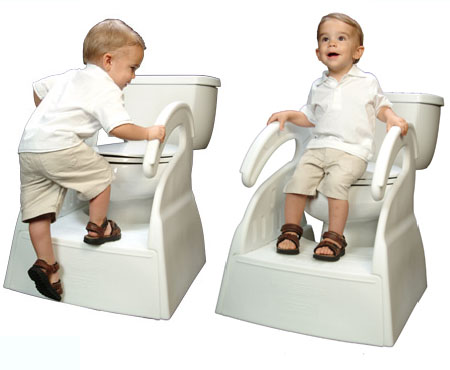
Potty training can be a tricky thing: get it right the first time and you will wonder what all the fuss is about. But if you make a few mistakes, they can haunt you for years. The Potty Stool makes sure you get it right: One step up. Wide Platform. Enclosed area around the toilet and step. Secure handles to help climb the step. Secure armrests when your child is seated. Strong rubber feet to lock down to the floor. Complete comfort for your child.

SAFE. SECURE. STABLE. POTTY TRAINING SOLVED. THIS IS THE ULTIMATE TOOL FOR POTTY TRAINING! The Potty Stool streamlines potty training by eliminating an entire stage. Now children can go straight from diapers to the toilet. The Potty Stool is a step stool that works with every toilet. The large platform means children can easily turn around without falling off. The comforting safety handles help children climb up and down and provide support while they are seated. This is the ONLY stool with SANITARY GRAB areas when children are climbing, standing, and sitting. Anti-bacterial, easy-clean, high strength custom plastic. Secure, high handles make every toilet toddler friendly.

http://www.amazon.com/gp/product/B000MZKTU4/ref=as_li_tl?ie=UTF8&camp=1789&creative=9325&creativeASIN=B000MZKTU4&linkCode=as2&tag=potttraigir0d-20&linkId=5WONHIXA3UBZFYSAChild seat not needed. Adults can use the toilet when The Potty Stool is in place by removing only one sidewall. Parents and children love the safety, simplicity, and ease of use. Ships contiguous 48 states by UPS only-Cannot ship to APO/FPO/DPO, AK, HI. Dimensions of the stool: height of step platform is 8.5 inches, requires 2 inches each side of toilet and 11 inches or less in front of toilet bowl, depending on the model of toilet. Made in USA. One year manufacturer's warranty. We apologize for the high cost of this item but we
have chosen high cost manufacturing methods to ensure complete safety, stability and comfort for your child.

Technical Details
Item Weight49 pounds
Product Dimensions23 x 23 x 25 inches
UPC094922701992
Item model numberTPS-100
StyleSolution to Potty Training
Best usesToddler, Potty Training, Baby, Step stool
Number of reclining positions2
  • Solution to Potty Training!
  • SAFETY HANDLES and COMFORT PLATFORM
  • Only ONE step up for young ones. Maximum strength and safety.
  • COMPLETELY WASHABLE AND SANITARY
  • Promotes Independence and Self-Confidence. See more product details
There is also a potty training book entitled Potty Train in Three Days of everyone who reads this book proved to be 97% successful in potty training toddler age children. 

Read the information and more on potty training tricks book:
Potty Train in Three Days & No Cry Potty Training Solution

Sunday, May 25, 2014

The prospect of potty training can be daunting - for both you and your child! The main thing you need to consider is whether your child is ready to be potty trained - if they are, then the whole process will be a lot easier, not to mention faster. Read below to find out how to go about potting training your child - with advice on everything from how to know if your child is ready, to setting up an effective potty-training schedule, to praising your child's successes and offering appropriate rewards. Ready, steady, potty!

1. Preparing to Potty Train

Know when your child is ready
It is very important that your child is developmentally ready to learn how to use the potty, as this will make the process so much easier and faster. When a child is ready to be potty trained will vary from child to child, and can be any age from 18 to 36 months. In general, girls tend to be toilet trained slightly earlier than boys - the average age for girls is 29 months, whereas for boys it's 31.
  • You can tell if your child is ready to potty train by looking out for the following signs:
    • Showing an interest in the bathroom and how other people use it.
    • Good motor skills - including the ability to walk to the bathroom, climb steps and pull down pants.
    • Good language skills - being able to understand instruction and toilet-related words as well as the ability to communicate a need to go.
    • Predictable bowel movements and an ability to keep a diaper dry for more than two hours.
    • An understanding - through words or facial expression - of when they need to urinate or have a bowel movement.
    • A desire to please parents and act like a grown up.
  • You should never push your child to potty train if they are not ready - they will only resist you and the potty training process will be frustrating and time-consuming. Give you child another month or two and you will find it much easier.
  • It has also been proved that one of the most effective ways to potty train, is to start the process way before the physical process starts, with games and activities to prepare them for the general idea.
Understand that the potty training process will take time
The number one thing you need in order to successfully potty train your child is patience! Potty training is a process, it does not happen overnight. You and your child will need to work on it together and overcome any accidents and setbacks. Although you hear of some parents who potty train their child over the course of a single weekend, it is completely normal for the training process to take up to six months.
  • Try to be as consistently upbeat and encouraging with your child as possible and deal with any accidents calmly. Remember that no child is going to graduate high school in diapers - they will get there!
  • You should also be aware that although your child might be fully potty trained during the day, it is common for children to continue wetting the bed at night until the age of five. They should be able to stay completely dry by the age of six, but until that time be prepared to use pull-ups and plastic sheets at night.
Get the right equipment
A training potty is the easiest and least intimidating option for a child new to potty training. You can get all sorts of cute potties, some in the shape of your child's favorite cartoon characters. These are a good choice as you want your child to feel as comfortable as possible with the potty and enthusiastic about using it. You should also consider getting a potty with a removable seat, which you can place on the toilet once your child is ready.
  • If you decide to use the toilet from the beginning, make sure to get a step stool for your child so their feet feel firm and secure while sitting on it. This will make them feel more stable and help eliminate the fear of falling in.
  • Consider placing the potty in the playroom or living area to begin with. This will help your child to get comfortable with the potty and less intimidated by the prospect of using it. They may also be more inclined to use it if it's within easy reach.
Choose the right time
Choosing the right time to potty train can make a huge difference in your chance of success. Avoid trying to potty train if your child has recently gone through a period of change - such as the arrival of a new sibling, moving to a new house or starting at a new day care - as these things can be stressful for a child and potty training will only add to that stress.
  • Choose a period when you can spend long periods of time with your child at home - so they will feel comfortable and secure with their environment and always have you there for encouragement and support.
  • Many parents choose to potty train their children over the summer months - not only because they tend to have more free time to spend with their children, but also because their child will be wearing less layers of clothing, which makes getting to the potty on time much easier for the child.
Set a schedule
Setting a schedule can help turn potty time into a routine, which will help your child adjust to their new responsibility and help them to remember to go all by themselves. To start off, try picking two to three times a day when you will put your child on the potty and let them sit there for a few minutes. If they use it, that's great, but if not don't worry about. You just need your child to get used to the feel of it.
  • To encourage your child to go, try to pick times when he/she is most likely to need the bathroom, like first thing in the morning, after mealtimes and before bed. You can also give your child extra liquids with their meals if you like, as this will help to get their digestive system going.
  • Make potty time part of your child's bedtime routine - they put their pajama's on, wash their face, brush their teeth and go to the potty. They'll soon remember to go all by themselves.
2. Getting Your Child Comfortable with the Potty

Introduce your child to the potty
Let your child get comfortable with it, so they understand that the potty is not an intimidating or scary thing at all. Put the potty in their play area, where they can sit on it fully clothed, while reading a book or playing with toys. Once they've grown accustomed to or even fond of the potty, you can move it to the bathroom.
  • Use some games, stories, activities, and apps to introduce them to the idea of toileting, too.
Show your child how to use it
Your child next needs to understand what the potty is actually for. To explain it, try taking your child's dirty nappy and popping its contents into the potty. Tell them the potty is where the "poop" and "pee-pee" goes. Alternatively, you can put the contents of the nappy in the toilet and let them wave goodbye as it flushes away.
  • You can also demonstrate how the toilet is used by bringing the child into the bathroom with you when you need to go. Have them sit on the potty as you sit on the toilet and show them how it's done. With any luck, this will encourage them to use the potty like a "big by" or "Big girl".
  • If possible, little boys might be better off going to the bathroom with Daddy, to avoid being! However, you should forget about teaching boys to pee standing up just yet, as this can be confusing for them (not to mention messy). For now, have them sit on the potty for number ones as well as number twos!
Let your child sit on the potty for at least 15 minutes a day
Let your child get accustomed to the potty by letting them sit on it for five minutes, three times a day. Encourage them to go, but don't worry if they don't. Praise them for trying and let them know that they can try again later.
  • If they're impatient to get off, try giving them a book or toy to play with so the potty doesn't feel like a punishment.
  • Never force your child to sit on the potty if they don't want to - you'll only cause further resistance which can upset the whole training process.
Use the right toilet-related words
Try not to confuse your child by using vague or obscure words to describe the act of using the toilet or the names of particular body parts. Use easy, straight-forward, child-friendly words like "pee", "poop" and "potty" when speaking to your child.
  • Never use words like "dirty" or "disgusting" to describe natural bodily processes, as this can cause your child to feel ashamed or embarrassed about their actions, which can negatively-impact the potty training process.
  • If a child feels anxious or embarrassed about using the potty, they can start to hold everything in - which can lead to health problems such as constipation and urinary tract infections. For this reason, it is very important that a child feels comfortable with using the potty.
  • Being open with your child will give them confidence and let them know that they should feel proud of themselves for using the potty correctly.
Stay with your child while they use the potty
Children can feel extremely anxious about using the potty for a variety of reasons - if they are using the toilet they can be afraid of falling in or scared of the flushing noise that the toilet makes. Other children may see their bowel movements as part of themselves, which they feel they are losing by using the potty. For this reason, it is important that you stay with your child at all times while they are on the potty, at least at first.
  • Smile at your child, give plenty of praise, and use a calm, soothing tone of voice at all times. You can also try singing songs or playing games with your child while they're on the potty, so they come to see potty-time as a fun activity, rather than something to be feared.
Read potty-themed picture books
Many parents have found books dealing with the subject of potty training to be an extremely helpful tool in teaching their child how and why they should use the potty. These books are often humorous and encouraging, with engaging pictures which children can relate to.
  • Get your child involved in the reading process by asking questions and getting your child to point out certain items in the pictures. Then once you've finished reading, ask your child if they'd like to try using their potty, just like the little boy or girl in the book.
  • Some popular potty-related books include "Once Upon A Potty" by Alona Frankel, "Everyone Poops" by Taro Gomi, and "I Want My Potty" by Tony Ross.
3. Creating Good Habits

Learn your child's "need-to-go" signals
If you can learn to read the signs that your child needs to use the bathroom, then you can get them to the bathroom quickly and encourage them to use the potty instead of going in their diaper.
  • Common signals that a child needs to use the bathroom include: a change or pause in activity; squatting; clutching at their diaper; grunting; turning red in the face.
  • You can help your child to recognize these signs themselves by asking them "Do you need to use the potty?" or "Do you need to poop?" as soon as you notice the warning signs. Encourage your child to tell you whenever they feel like they need to go.
  • Be aware that some children will be reluctant to stop what they're doing, especially if they are playing and having fun, just to use the potty. You will need to encourage them and give them lots of praise to make it seem worth their while!
Let your child go nappy-free for an hour or two a day
Many parents recommend the technique of removing a child's diaper and letting them run around the house naked for a couple of hours a day. They will enjoy the feeling, while also learning to recognize their body's "need-to-go" signals, without the safety net of a diaper.
  • Be aware that you will have accidents if you decide to employ this method - but an accident (or five) may be just what your child needs to realize the importance of using the potty!
  • Don't act cross or disappointed when your child has an accident - just clean it up calmly and reassure your child that they'll make it to the potty on time next time. If you scold them, they may become anxious about using the potty and start holding.
  • Many parents dislike using pull-up diapers because they are now so absorbent that a child cannot tell if it is wet or not. Without some feeling of discomfort, they will not be able to learn their body's signals and make it to the bathroom on time. If the child is naked, or wearing cloth underwear however, there will be no mistaking the need to go!
Make using the potty part of the morning or nighttime routine
Using the potty needs to become a normal and natural daily activity for your child, and the best way to make this happen is to incorporate potty time into their pre-existing daily routine.
  • Sit them on the potty after they brush their teeth each morning, or before their nightly bath. Do this every day and night, without fail, and your child will soon be hopping on the potty all by themselves!
Show your child how to wipe correctly and flush the toilet
Instruct your child on how to wipe themselves properly with toilet paper before they hop off the potty. Make it easier for them by always leaving a roll of toilet paper (maybe the decorated kind!) beside the potty. This is particularly important for girls in particular, who should wipe from front to back to avoid spreading bacteria.
  • They will probably still need help wiping for some time, especially after a number two, but is good to get your child into the habit of trying.
  • Once they are done, let your child do the honors of flushing the toilet and wave goodbye or cheer as everything gets flushed away. Congratulate your child on a job well done!
Remind your child to wash their hands after they use the potty
Children are usually impatient to get back to the important business of playtime once they are finished with the potty, but you must make sure to emphasize how important it is for your child to wash their hands before leaving the bathroom.
  • To encourage hand washing, get your child a step stool so they can easily reach the sink and buy some kiddy's anti-bacterial soap in a bright color that they will enjoy using.
  • Teach your child to sing a song while they wash, so they will not be tempted to wash too quickly. Get them to sing the alphabet when they start washing their hands and tell them they can only stop when they get to the letter Z!
4. Dealing with Successes and Setbacks

Praise your child for trying
The most important thing you can do for your child during potty training is to offer endless encouragement, regardless of whether they succeed in using the potty or not. Praise them for every little success - from telling you when they need to go, to pulling down their own pants, to sitting on the toilet for a full minute. Even if they don't end up going, tell your child well done for trying and remind them that they can try again later.
  • Just be careful not to over-encourage your child. Offer praise in a calm voice and don't get over-excited. Being too over-the-top with your encouragement is it's own form of pressure and may cause your child to feel anxious about pleasing you.
Offer rewards for small successes
Many children respond well to incentives or rewards for using the potty. What kind of rewards you decide to offer will depend on both your parenting style and what your child responds to. Some ideas are outlined below.
  • Food: Some parents use candy as a reward for successfully using the potty. For instance, you could give your child three mini M&M's or a jelly worm every time they manage to go in the potty. Other parents are wary of offering food as a reward, as they believe it might affect their children's eating habits in future.
  • Star Charts: Another common in motivator is for parents to create a star chart, where a child is given an additional gold star for every time they successfully use the potty. Sometimes the gold star is motivation enough in itself, while other times parents offer additional rewards if a child reaches a certain number of stars by the end of the week - such as a trip to the park or an extra story at bedtime.
  • Toys: Another good option is to buy a small set of toys (nothing big - maybe just a collection of toy cars or plastic animals) and let your child choose one every time they use the potty.
  • Piggy Bank: Some parents offer their children monetary incentives to use the potty! Put a piggy bank in the bathroom and pop a penny in every time your child uses the potty. Once it's full your child can cash it in to buy some treats, like an ice cream or a ride on the machines at the mall.
Share the good news
A great way to encourage your child to take pride in using the potty, is to let them boast about it to a friend or family member. Make a big deal of them being able to tell Mommy or Daddy about how well they did with the potty when he or she comes home at the end of the day. Or else give grandma or Uncle Joe a heads up and let your child ring them to tell them the good news.
  • Getting positive, encouraging reactions from someone other than you (the potty trainer) will impress upon your child how good it feels to "be a big boy/girl."
  • Another trick parents use is to rope in a friend or family member to portray their child's hero or favorite cartoon character over the phone. It could be Dora the Explorer, Spiderman or Barney the Dinosaur - whoever your child likes. Telling their hero about their potty training successes and getting praised in return will make them feel proud as punch!
Don't scold your child when they have an accident
Scolding and giving punishments are major no-nos when it comes to potty training. Remember that your child has only recently developed the ability to recognize and control their bladder and bowel movements, and they are still getting the hang of things. They don't intentionally have accidents just to annoy you or cause you extra work.
  • As mentioned before, scolding a child for having an accident or failing to use the potty can cause them to develop anxiety around the whole issue. This anxiety may cause them to start trying to hold everything in, which just causes further accidents and may lead to both health and psychological problems done the line.
  • If your child has an accident reassure them that it's okay and that they will make it to the potty next time round. Let them know that you're proud of them for trying and that you'confident that they will soon be using the potty just like a big boy or girl.
Have patience
Potty training can be a stressful and frustrating time for parents, but remember that it is only temporary and your child will get the hang of it sooner or later. Don't start panicking about whether your child has development issues if things aren't going well. When your child is ready, they'll pick it up just fine.
  • If your child just doesn't seem to be getting the hang of it, the best thing to do might be to give potty training a break for a month or two and then try again.
  • Remember, some kids don't become fully potty trained until they're three - and that's perfectly normal!
5. Taking Potty Training to the Next Level

Let your child pick out some "big boy" or "big girl" underwear
Once your child is doing well and using the potty consistently you can bring them shopping to pick out some "big boy underpants" or "big girl underwear" together. They will feel so proud and grown up wearing them, it will make you smile! Let them wear the underwear at home, though you may want to continue using diapers or training pants at night or when you're on the go, as accidents will happen.
  • Cloth underwear will actually help your child with their training, as they will be able to tell when the underwear are wet - something which is not so easy with absorbent diapers.
  • They will also be so pleased with their new underwear that they will be reluctant to get them wet, and therefore more diligent about keeping them dry!
Take the potty on the road
Getting the hang of using the potty or toilet at home is one thing, but strange, unfamiliar bathrooms can be intimidating to a child and they may refuse to use them. You can overcome this, and avoid putting your child back in diapers if you're trying to phase them out, by bringing the potty with you while travelling. Potty's with removable seats are great for this, as you can pop them onto the seat of any toilet to recreate your child's comfort zone!

Teach your boy to pee standing up
Once your little boy has got the hang of peeing sitting down, it's time for him to master the art of doing it while standing up. Daddy can help with this one, by showing his little man how it's done. Just be aware that little boy's aim is not usually the greatest and you can expect some interesting attempts at making it into the bowl. One great method some parents use for training their boys how to get their pee in the bowl is to put some Cheerios or Fruit Loops in the toilet bowl and tell their son to aim directly for them. This turns it into a fun game which appeals to most boys' mischievous side!

Let babysitters and teachers know
Your potty training efforts will be undermined if your child is not being encouraged to use the potty by babysitters or child minders. Take the time to talk to anybody who frequently cares for your child - whether it's grandparents or the employees at your child's day care - and politely explain how important it is that they keep up your child's potty routine.
  • Tell them about your child's normal schedule, along with the words you use to refer to any potty-related activities, and ask them to follow the same lines. This will prevent your child from becoming confused and your potty-training routine from being disrupted.
  • Always send a spare change of clothes, some wipes, and a few emergency diapers or training pants with your child whenever they are away from home. This will make things easier on the caregivers and help your child to feel less embarrassed about any accidents.
When your child is ready, progress to night training
When they are dry or fairly dry most days, your child may be ready for nap and night-training. If so, invest in some bed pads (you'll want at least 3 so you can change them easily) and put one on top of the bottom sheet on your child's bed. Look for the kind that have a soft layer on top and a plastic layer underneath. When that's done, put the potty next to the bed when your child goes to bed or goes for a nap.
  • Leave your child's bedroom door open and encourage them to call you if they wake up needing to go. If they do, put them quickly on the potty and praise them for doing so well.
  • If they go in the bed, change the pad and don't make a big deal of it. Deal with it calmly and matter-of-factly and reassure your child that it's okay. Remember that children may reach the age of six before they stop having accidents at night-time.
Advice I give such children potty training products specifically for your child, so that a great motivation to carry out air training.

Our following products are already many who use aliases already proved successful in the toilet training of children:

  1. Safety 1st Comfy Cushy 3 in 1 Potty - More Details
  2. Disney Pixar Car 3 in 1 Potty Trainer, Red - More Details
  3. Summer Infant Step-By-Step Potty Trainer and Step Stool - More Details
  4. 3-in-1 Toilet Trainer Potty Seat - More Details
  5. Safety 1st Pink Musical Talking Potty - More Details
  6. Fisher-Price Cheer for Me Potty - More Details
  7. Summer Infant All-in-One Potty Seat and Step Stool, Blue - More Details
  8. Primo 4-In-1 Soft Seat Toilet Trainer and Step Stool White with Pastel Blue Seat - More Details
  9. BABYBJORN Toilet Trainer - White/Black - More Details
  10. Sesame Street Abby Cadabby Magical Potty Chair, Fuchia - More Details
 
Read the information and more on potty training tricks book:
Potty Train in Three Days & No Cry Potty Training Solution

Monday, May 19, 2014

I believe toilet training is mostly a decision parents need to make as soon as they as parents are ready.

A child will learn to do just about anything if the parent is wiling to teach. Think of the first time your child latched on to your breast or a bottle to eat. Think of the first time your child started walking.

A Toddler
Potty Training 
There are developmental stages in life however just like the need to eat and digest the food a child eats, the need to eliminate is there from the day a child is born. The saying "your child must be both physically and emotionally ready for toilet training" I believe is not true.

Toilet training my youngest daughter as an infant proved to me over and over the choice I have every day to either put her in diapers and allow her to soil her self while desensitizing or I could hold her and teach her that's ok to feel and eliminate.


Of course I chose to let her feel and teach her to eliminate. I am a proud mom and would like to share that my little Abbie was fully potty trained by four months old and once she learned to sit and crawl she would use the potty on her own.

With the use of diapers I need to agree with most experts who say most children are ready when they are between 22 and 30 months of age, although every child is different.

Potty training can becomes a long and frustrating process if you try to start it before your child is ready emotionally and physically once you have used diapers, however with the right amount of time and tools it can be done at any stage in your child's development.

Potty Training at 11 mo
Before a child can use the toilet, he/she must be able to control their bowel and bladder muscles.

Some signs of this control are having a dry diaper after a nap or for at least 2 hours at a time, having bowel movements around the same time each day and not having bowel movements at night.

For total independence a child should also be able to climb, talk, remove clothing, and have mastered other basic motor skills before they can use the toilet by themselves, and until then a parent should be willing to offer support.

I believe most children are physically ready to toilet train before they are emotionally ready.

Your child must want to use the toilet and be willing to cooperate with you. He or she may even talk about being a "big boy" or "big girl" and wearing underpants rather than diapers.

Training generally does not go well if your child is in the stage where "no" is his or her automatic response to every request, however giving it enough time will create not only a bond it will also create trust and follow the leader game will have a brand new meaning.

When did you start potty training and how did it go?

Read the information and more on potty training tricks book:
Potty Train in Three Days & No Cry Potty Training Solution

Saturday, May 17, 2014

Did you know your toddler is listening to absolutely everything you say and he is storing it away at an incredible rate?

In our previous article we looked at Effective Communication with Toddlers, and this week we are looking at Language Development in Toddlers. I hope you find this short article helpful in your journey as a parent.

I would like to encourage you to use the correct names for people, places, and things when you address your toddler instead of using a “baby talk” form of conversation. It is also best if you speak slowly and clearly, and keeping it simple for your toddler to follow and actually engage in conversation.

Your toddler may continue communicating with gestures by pointing at pictures in a book, handing you his shoes or jacket when he wants to go outside, pointing at something he wants, imitating actions and may very well use them in play.

Encourage him to use gestures because they are an important part of language and comprehension development. 

As a parent or educator you can make the connection between gestures and language by using a running commentary such as, "Do you want a banana?" (when your child points to it) or “Do you want a drink?” (when he points at the sink or a beverage), then wait for a response.
Once he is done communicating ask him, "What do you want, juice or water? Allow him to respond by making a choice and say to him, “OK, let's get some water." If you encourage this type of behavior it encourages your toddler to respond and participate in conversations, therefore his vocabulary will increase and so will his communication skills.

Your child will probably enjoy gesture games as well such as pat-a-cake and so-big, and identifying things, like body parts, pictures or objects, and familiar people. You can use questions like "Where's your ear?" "Show me the ball" and "Where is Mommy?"

Pronunciation may not be as clear as his communication since his vocabulary is growing at such a pace and most two year olds can be understood half the time. Repeating to him what he said with the correct pronunciation helps. Remember he is a toddler and “baby talk” is no longer cute.

Should parents be concerned if their child does not talk by a certain stage in his development or age?

How old was your child before you could understand him or her?

Do you have any concerns about your child?

Read the information and more on potty training tricks book:
Potty Train in Three Days & No Cry Potty Training Solution

Successful Potty Training Book